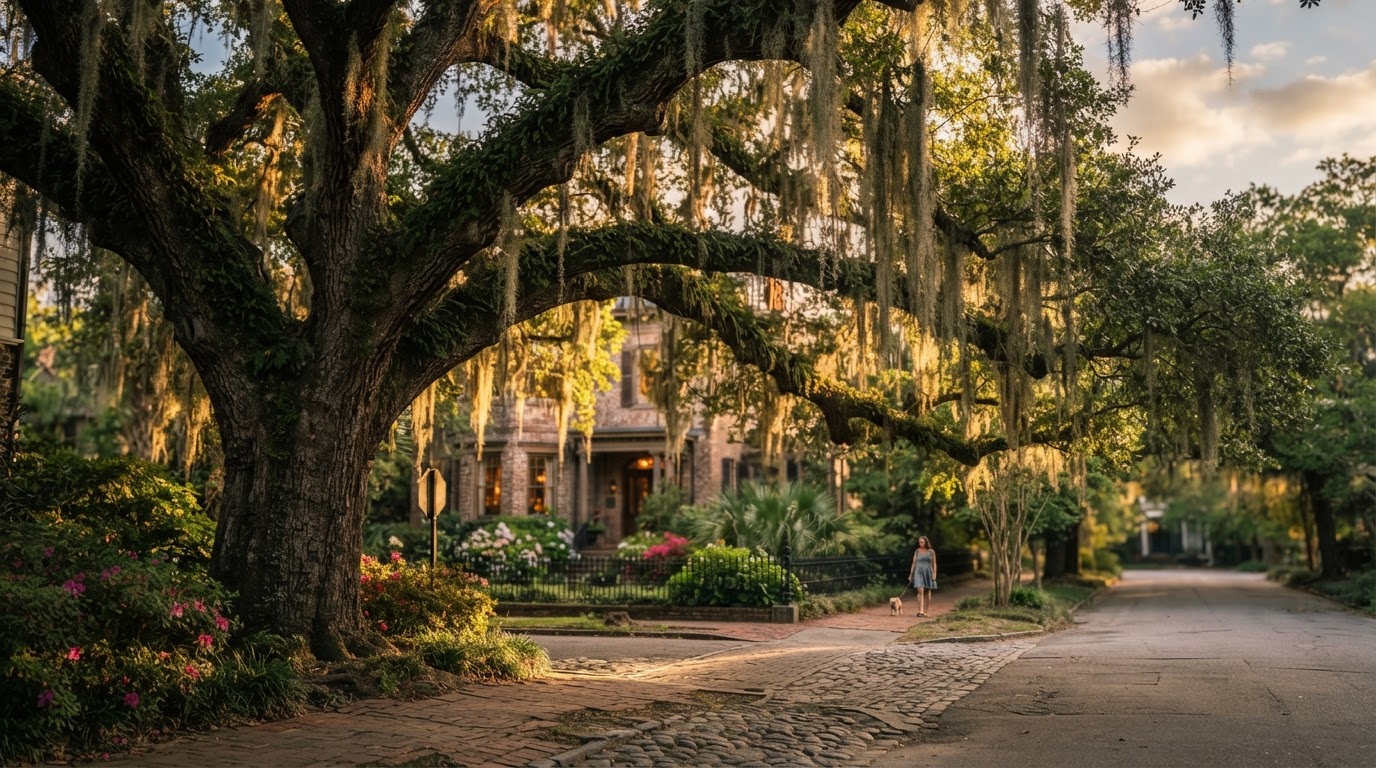
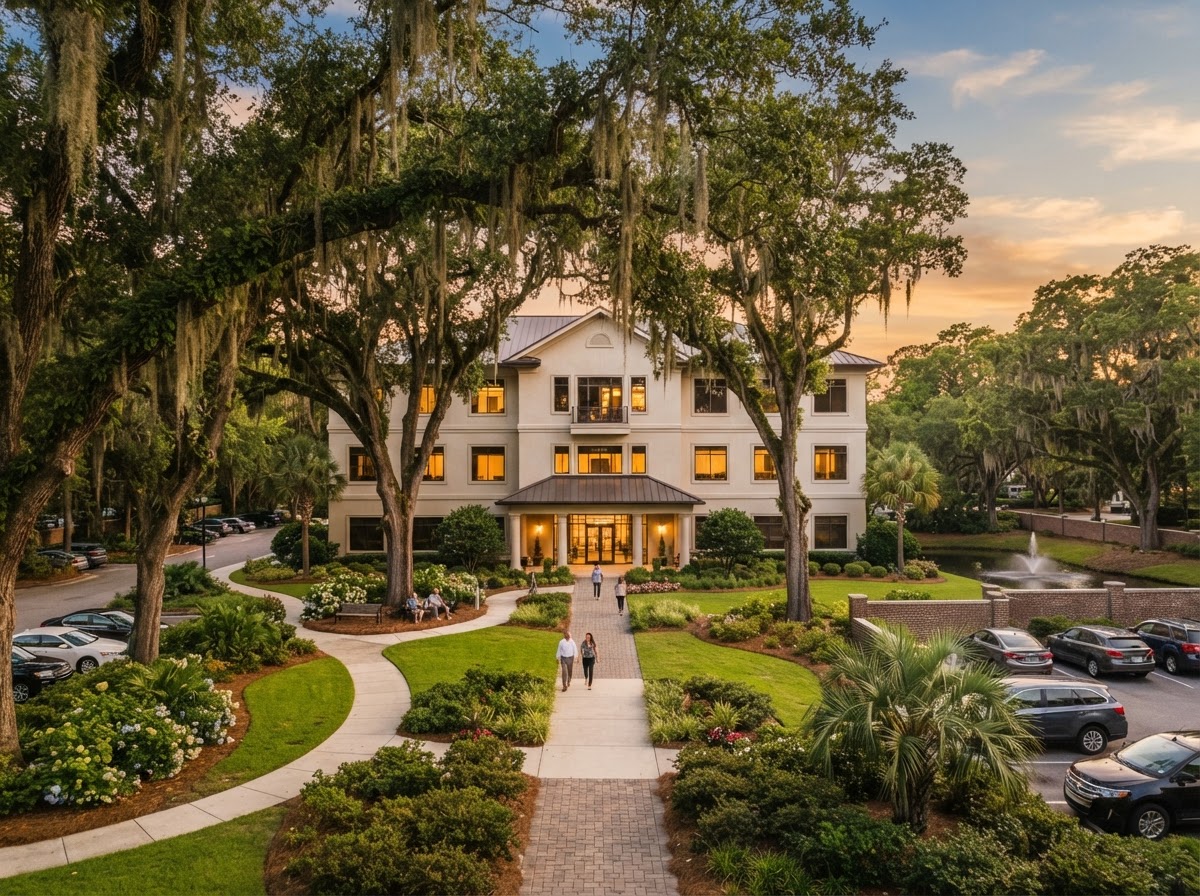
Savannah's tree canopy is one of the things that makes the area recognizable — live oaks draped in Spanish moss, pines rising behind them, water oaks and sweetgums filling in the understory. It also sits close to houses. A mature live oak can carry limbs forty feet long, arching directly over roofs, driveways, and fences. When one fails, it rarely fails into open ground.
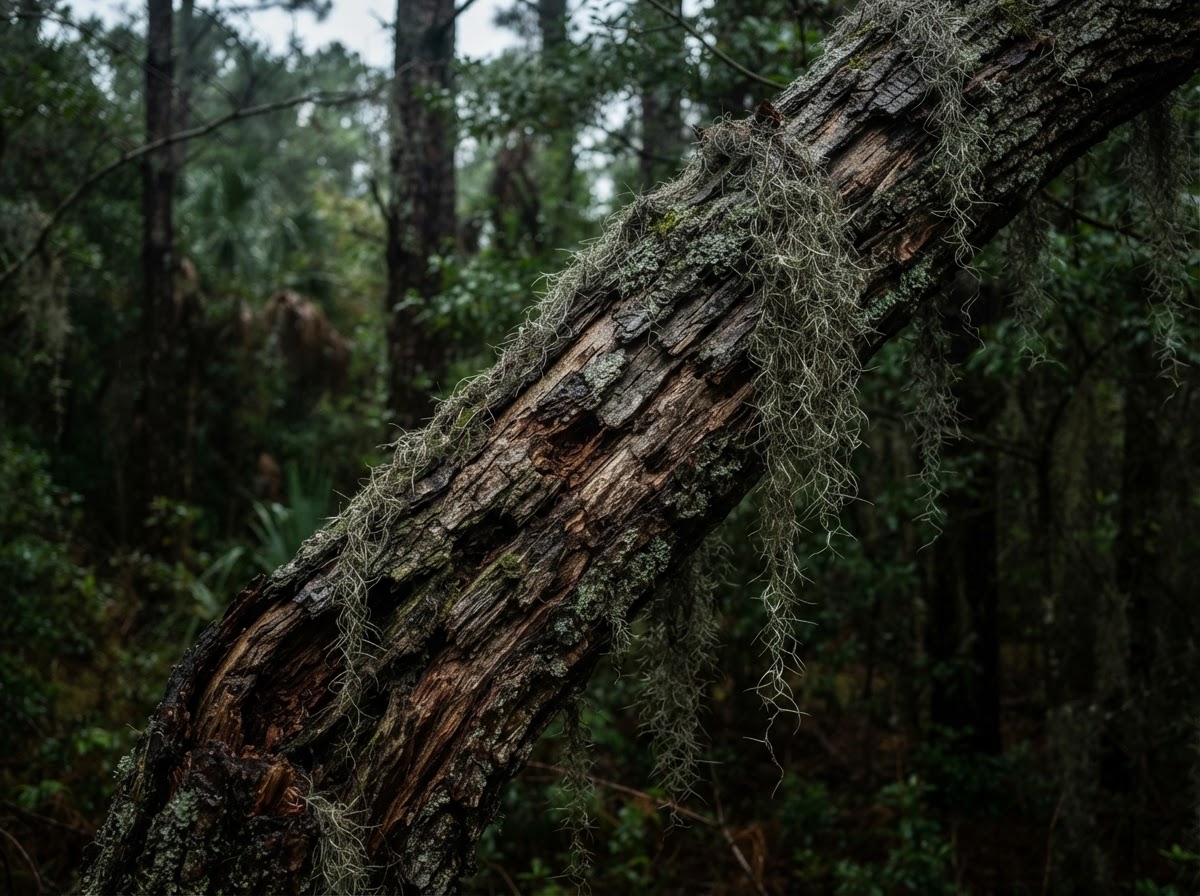
Growth habit matters as much as size. Live oaks hold onto wood that has been shaded out for decades, and pines grow tall and thin on a shallow root plate that holds in dry soil and less well when the ground is saturated. Heavy crowns catch wind, and older trees carry a longer list of old wounds, cavities, and weak branch unions.
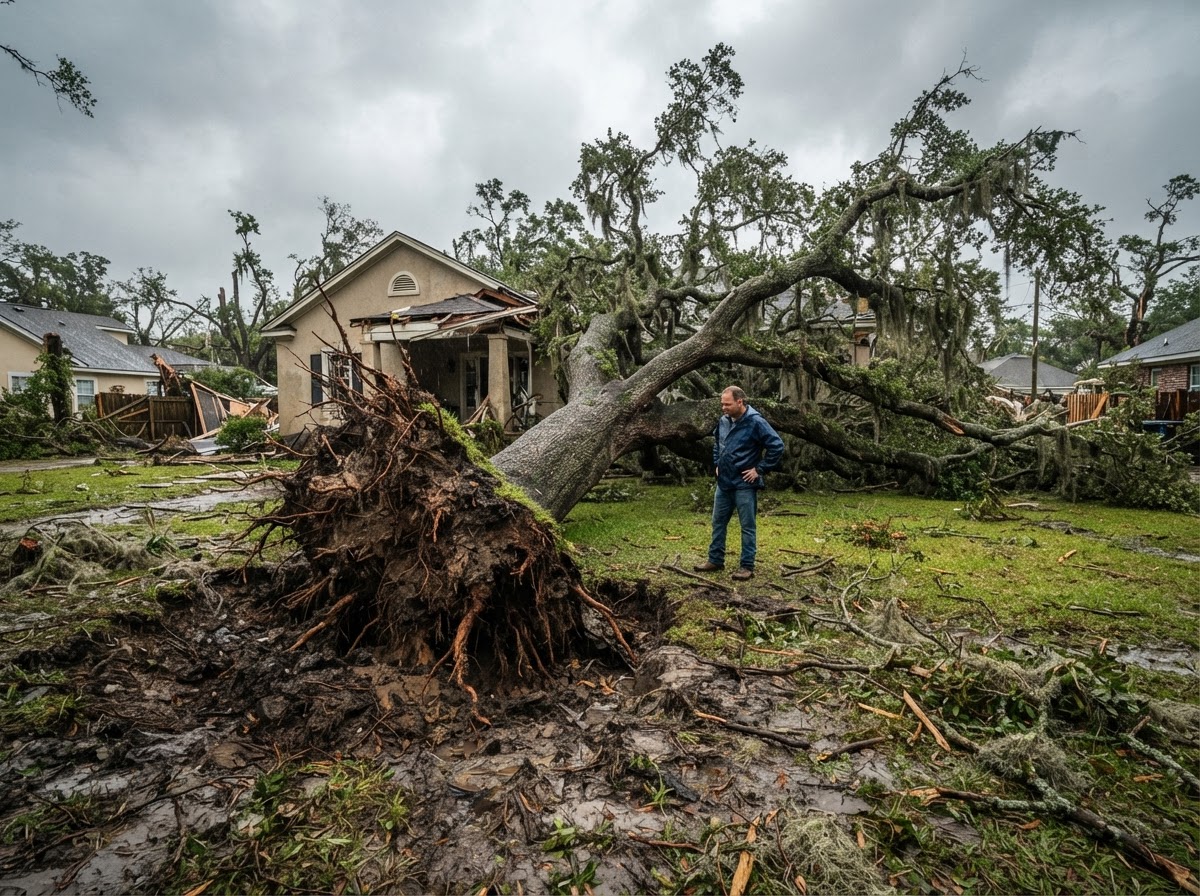
Coastal weather does the rest. Severe thunderstorms arrive with straight-line wind and brief, intense rain. Tropical storms and hurricanes bring hours of wind on already-soaked ground — the combination that uproots trees rather than simply breaking branches. After a storm, the usual calls involve a limb through a roof, a trunk across a driveway, or a tree leaning into a fence line.
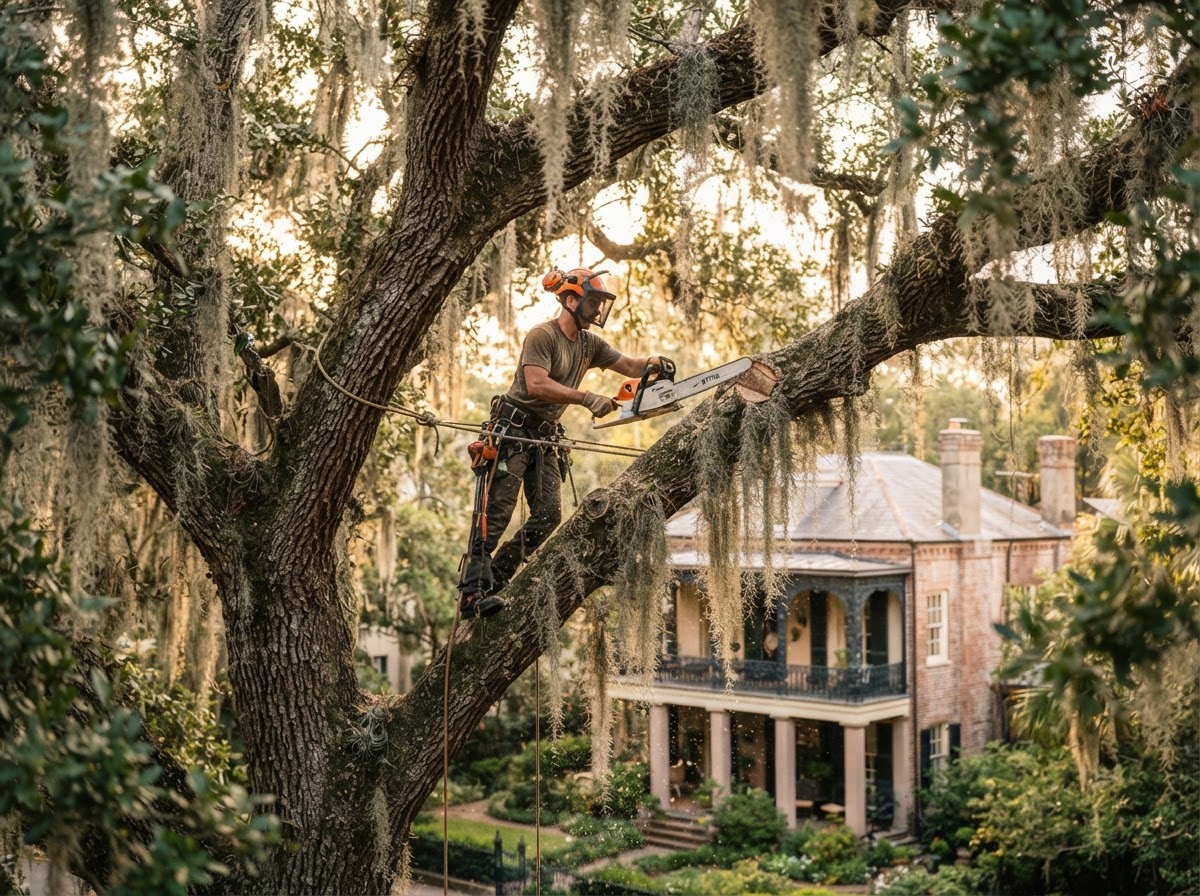
Routine trimming is the cheapest form of storm preparation. Removing deadwood, thinning a dense crown, and clearing limbs back from the roofline reduces the load a tree carries into a storm and takes out the branches most likely to come down first. Pruning also corrects structural problems while they are still small.
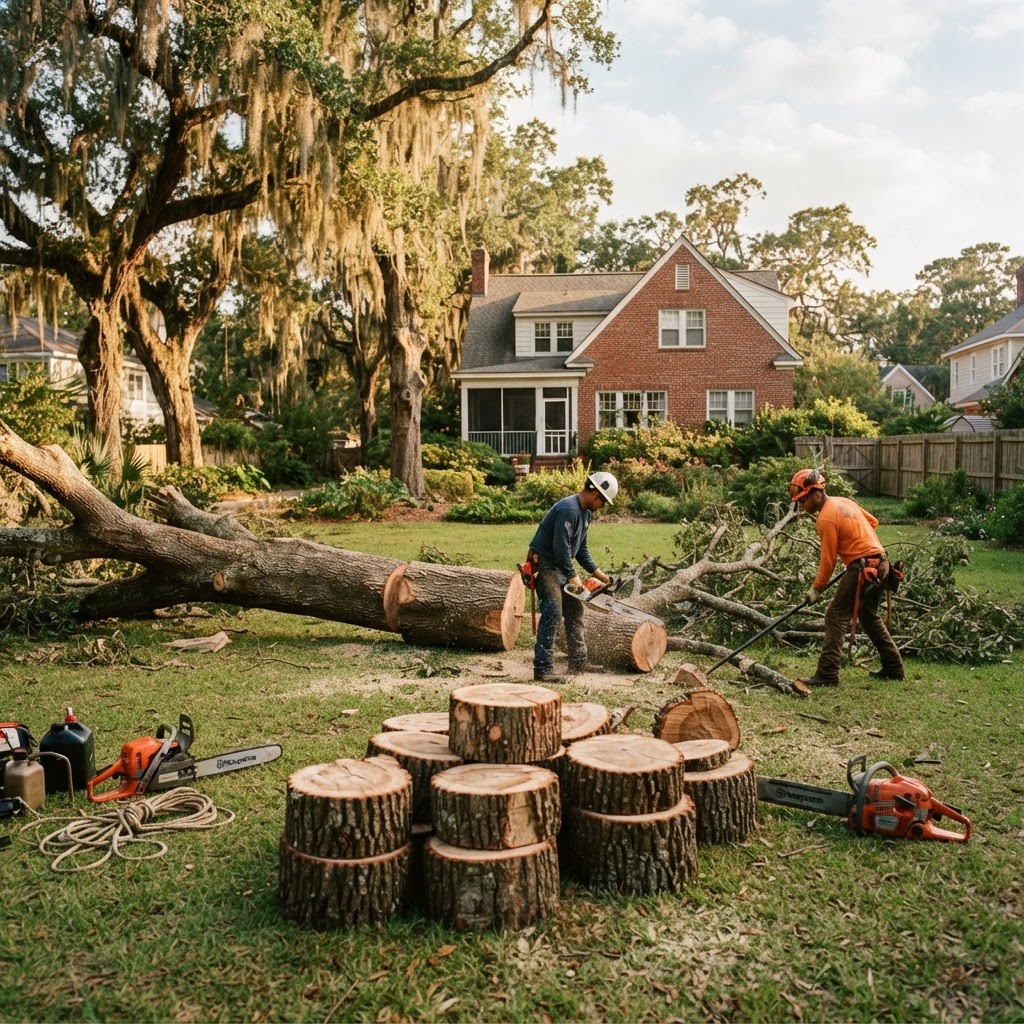
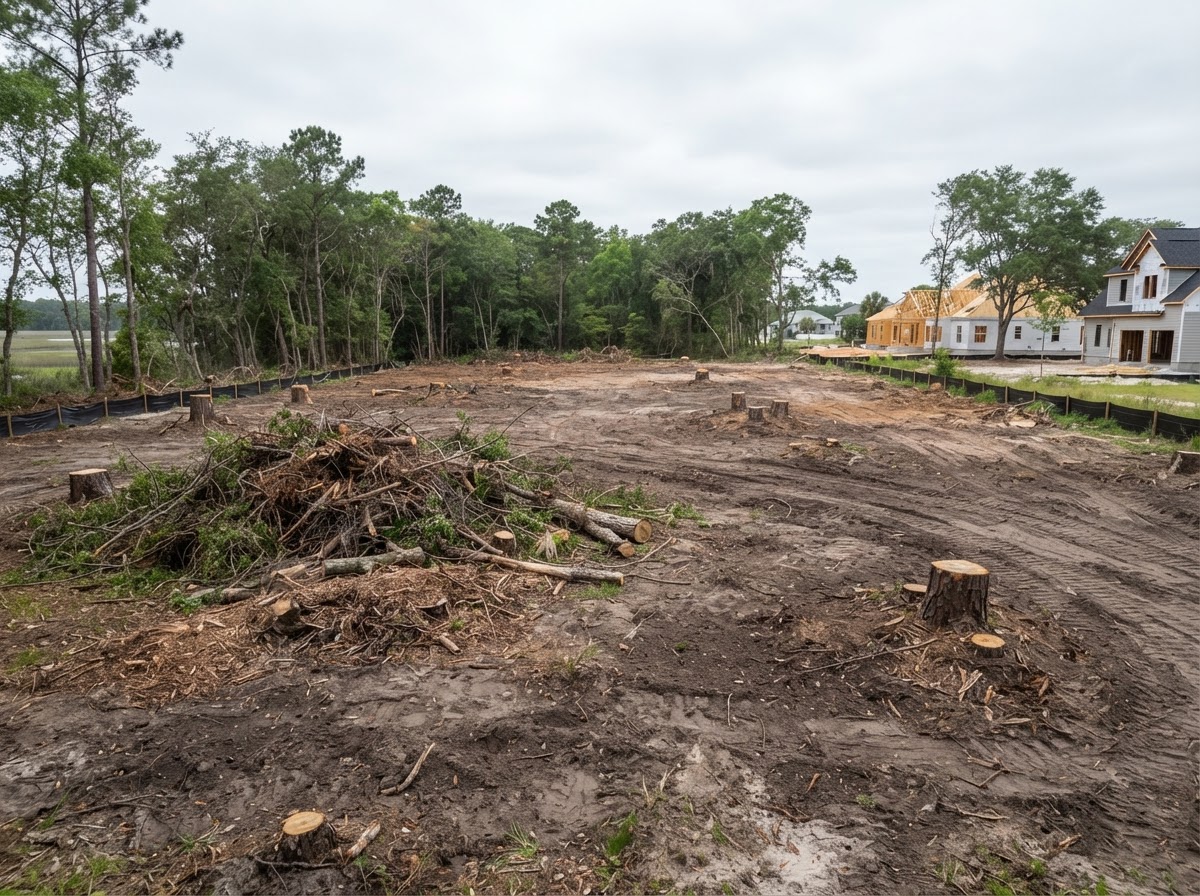
Removal is the answer when a tree can't be made safe — a hollow trunk, a lifted root plate, a major split, or a decline that has gone too far. Stump grinding usually follows, since a leftover stump keeps that patch from being sodded, planted, or built on. Landscaping and additions are the other common reason stumps come out.
None of this is a reason to clear trees from a Savannah yard; most mature trees are assets. The work is in knowing which ones need attention, which need pruning, and which are a genuine hazard — and in getting the small maintenance done before a storm decides the question.